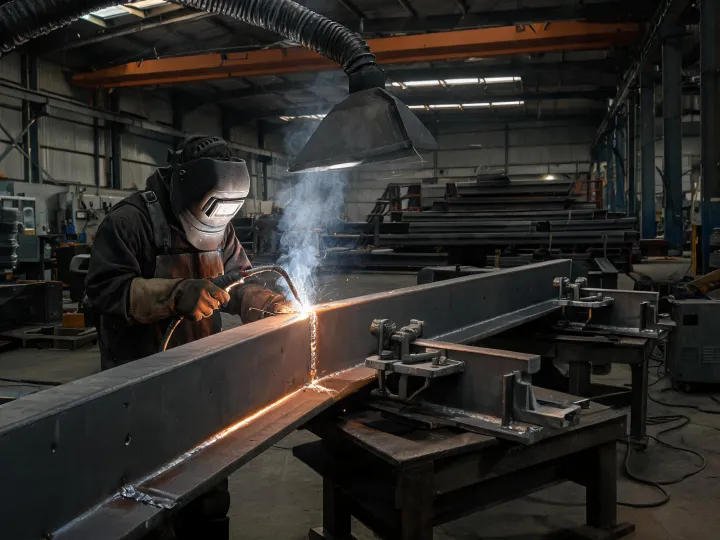
Structural Fabrication
Long shifts and mixed positions make duty-cycle basis, wire delivery, cable condition and access central to stable deposition.
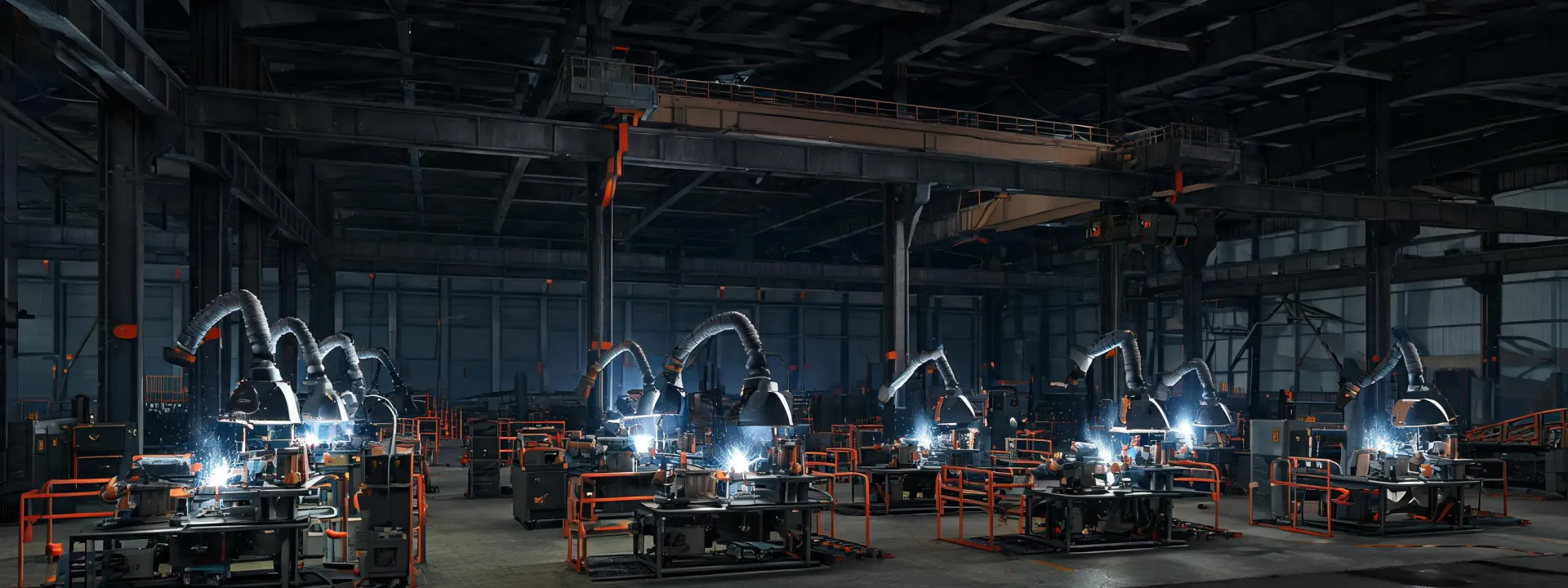
A joint in shipbuilding is not validated like a stainless process pipe or an aluminum transport frame. Equipment selection follows the material, access, duty, documentation and acceptance route of each production context.
Long shifts and mixed positions make duty-cycle basis, wire delivery, cable condition and access central to stable deposition.
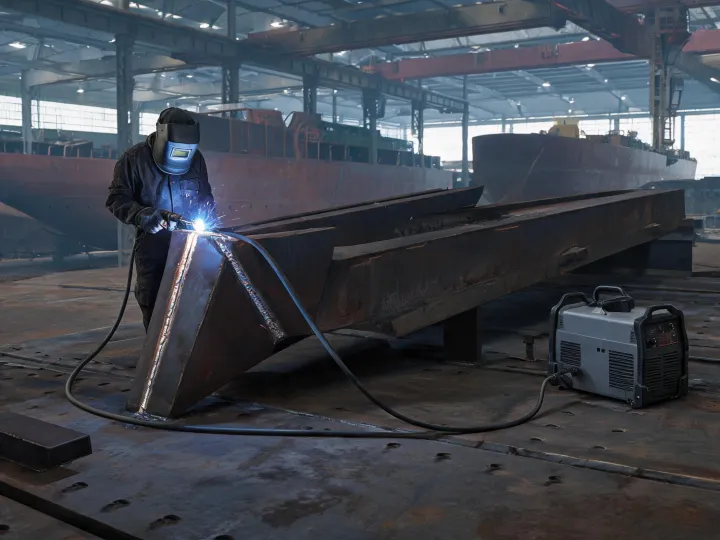
Distance, environmental exposure and confined access require a package that can be moved, serviced and checked in the field.
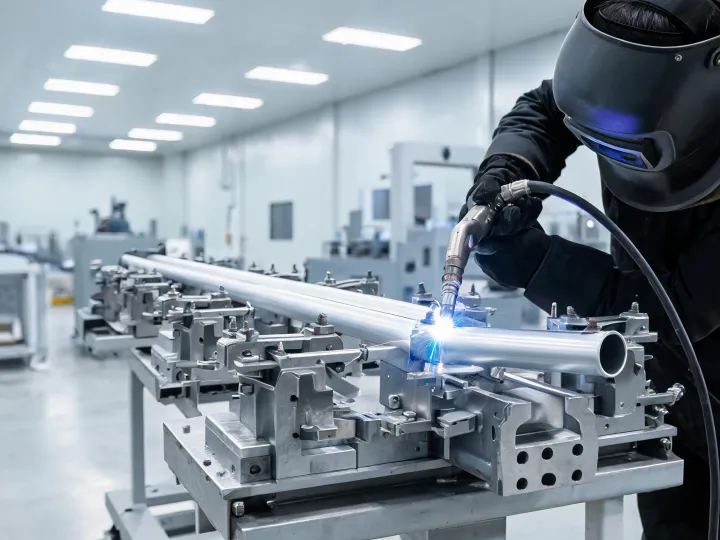
Aluminum feeding, pulse behavior, heat input and fixture repeatability affect distortion and cosmetic acceptance together.
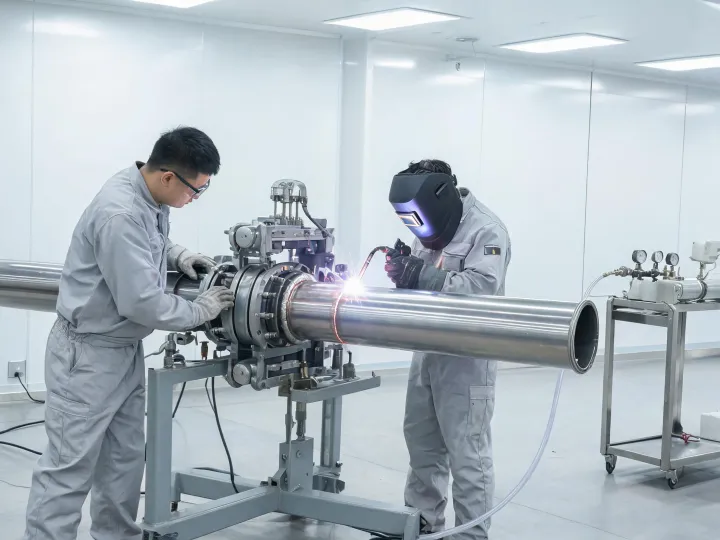
Root shielding, cleanliness, fit-up and inspection planning shape the working window more than nameplate current alone.
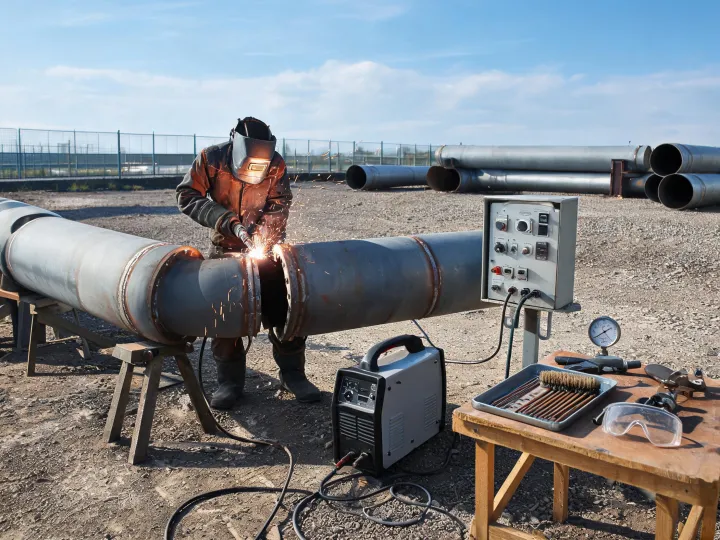
Site power, electrode handling, wind protection, procedure control and traceability set practical boundaries for repair work.
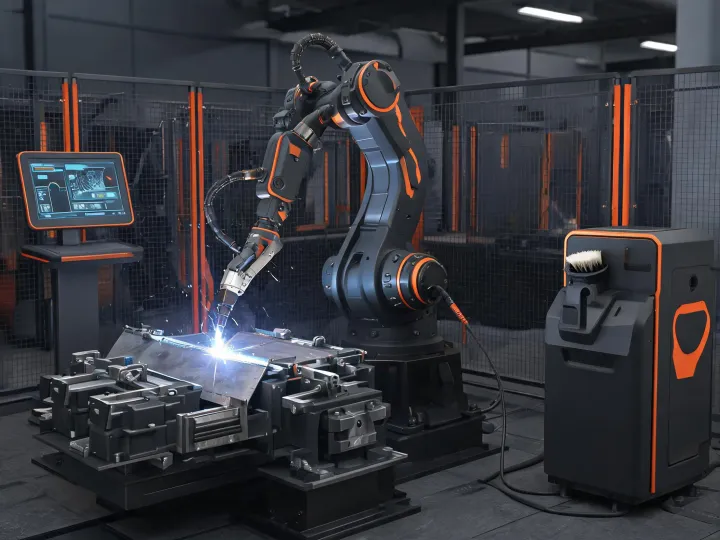
Robot path, contact-tip condition, part location and signal integration must be controlled with the welding parameters.
The numbers below describe the review framework, not unverified installed-base claims.
Pulsed modes can support heat-input and spatter objectives on suitable materials, yet they do not remove the need for stable wire feeding, correct shielding, clean fit-up and an approved procedure. Conventional modes may be simpler to maintain where the joint and deposition target allow them.
A larger current range does not automatically create more usable production time. Duty-cycle rating conditions, ambient heat, airflow, lead length and incoming power must be compared with actual arc-on demand. Oversizing also changes cost, portability and service access.
Automation improves repeatability when part location, fixturing, torch condition and program control are stable. Manual work remains appropriate for variable access and low-repeat parts. The decision should compare changeover, inspection, maintenance and training—not cycle time alone.
Send the material, thickness range, joint drawing, weld position, production rate and acceptance route. Kemppi application support can then frame a coupon test around measurable production constraints.